
Wellnest Physio & Rehabilitation Centre
Robotic Gait Training
Robot-Assisted Walking Therapy
An advanced robot-assisted walking therapy program that aims at aiding patients to walk independently after neurological and/or spinal problems.
What Is Robotic Gait Training?
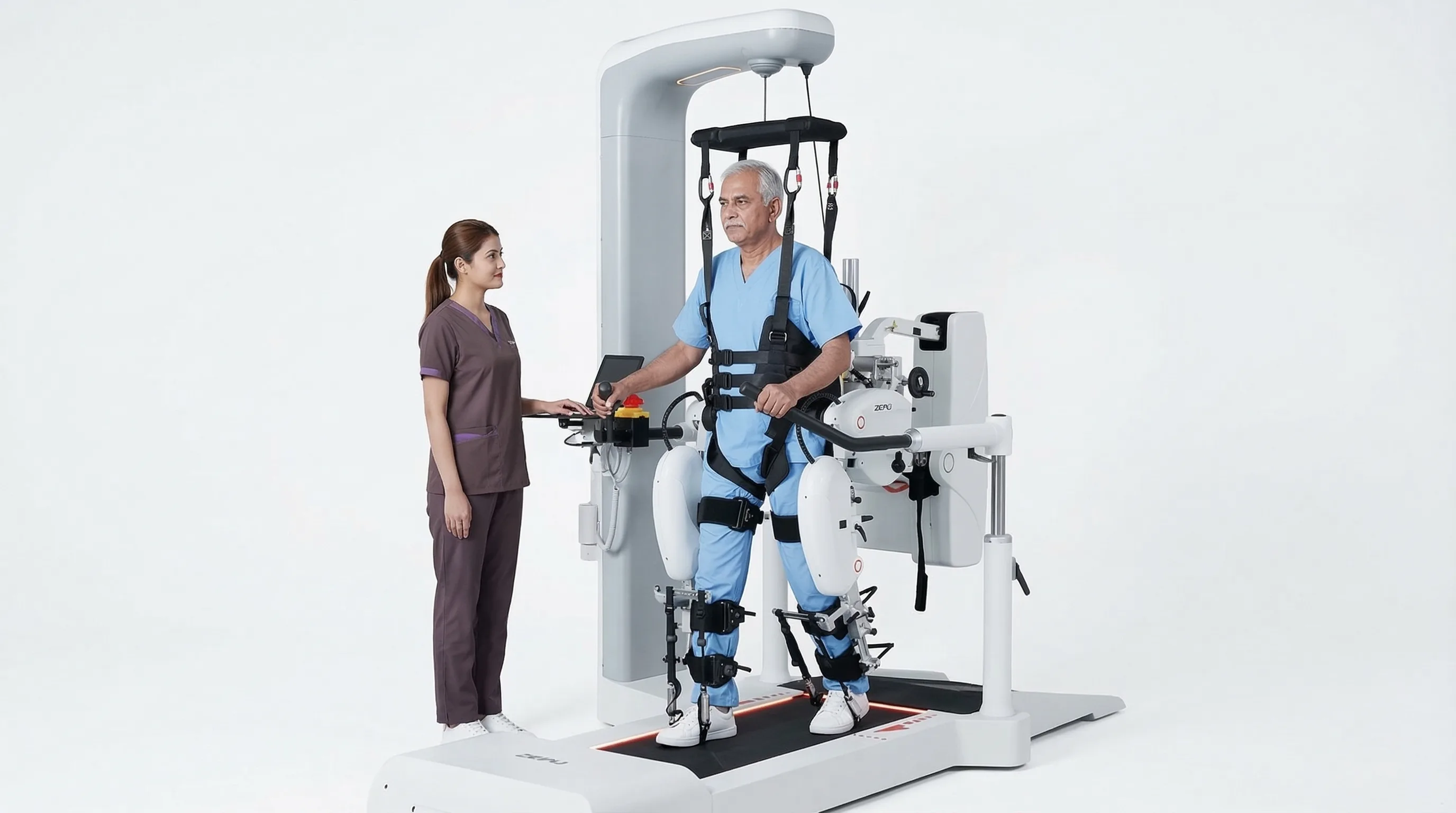
The technique of Gait Training Robotics is a sophisticated rehabilitation technique that incorporates robotics and exoskeleton technologies with the use of body-weight support treadmills to restore walking skills. This technique uses robotics to ease the natural gait cycle of the patient by supporting his/her body weight.
How It Works
The patient is securely held in a body weight support harness and robotic legs move his/her legs for every walking cycle on a treadmill. Repeated thousands of walking steps trigger the phenomenon of neuroplasticity, increase muscle strength, and restore walking skills.
Key System Engineering Elements
- Advanced Robotic Exoskeleton
- Body Weight Support System
- Computerized Gait Analysis
- Real-Time Performance Feedback
- Adjustable Robotic Assistance
- Progress Tracking Software
- Fall Prevention Technology
- Therapist-Controlled Training
Expected Outcomes
Patients will benefit from improved gait speed, balance, endurance, independence, and recovery time, in combination with an overall rehabilitation program.
Methodology at Our Center
At Wellnest Physio & Rehabilitation Centre, robotic gait training is utilized along with individualized physiotherapy, balance training, strength training, occupational therapy, and neurological rehabilitation for maximum recovery outcomes.
Frequently Asked Questions
Conditions Treated
- Stroke Rehabilitation
- Spinal Cord Injury
- Parkinson's Disease
- Multiple Sclerosis
- Traumatic Brain Injury
- Incomplete Paralysis
- Cerebral Palsy
- Peripheral Nerve Injury
- Post Spine Surgery Rehabilitation
- Neurological Gait Disorders
Who Should Have It?
Perfect for patients having problems with walking because of neurologic conditions, spinal injury, muscle weakness, lack of balance, and postoperative therapy.
When Should You Have It?
Should be done immediately after being medically stable even if the patient is not able to stand or walk yet.
Clinical Program Benefits
- Improves walking ability
- Restores normal gait pattern
- Enhances balance and coordination
- Reduces fall risk
- Builds lower limb strength
- Improves endurance
- Promotes faster neurological recovery
- Boosts patient confidence
⚠️ Compatibility Notice
Not recommended for individuals with unstable fractures, significant osteoporosis, uncontrolled heart diseases, or health conditions that necessitate medical approval.