
Wellnest Physio & Rehabilitation Centre
Multi-Axis Rehabilitation
Multi-Axis Rehab
Advanced multi-axis rehabilitation technology that improves balance, coordination, postural control, proprioception, and functional mobility using dynamic multi-directional movement training.
What Is Multi-Axis Rehabilitation?
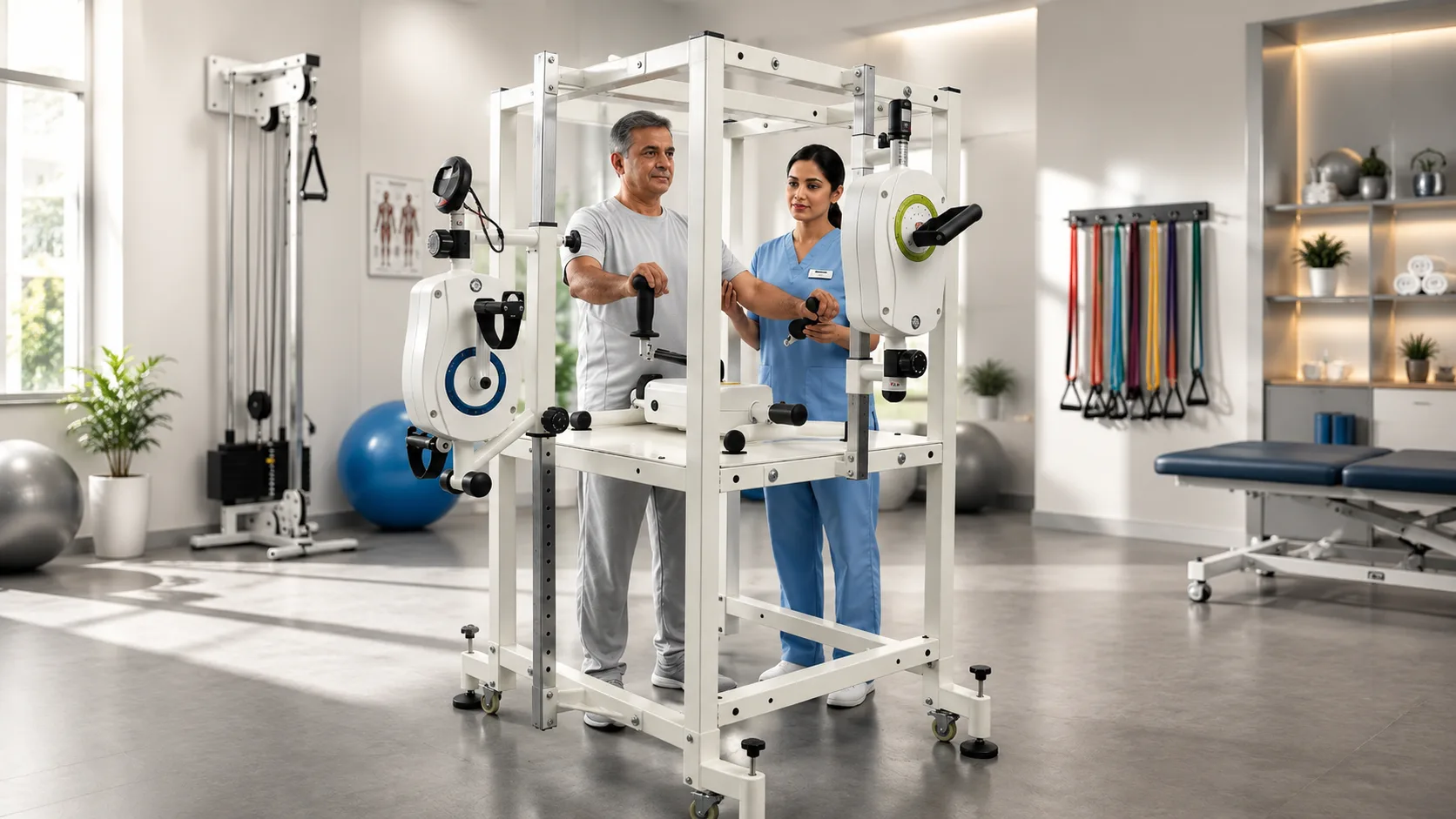
Multi-Axis Rehabilitation is an advanced technology-assisted rehabilitation system that trains patients to maintain balance, posture, and body control while standing or sitting on a computer-controlled platform capable of moving in multiple directions. The therapy challenges the body's balance mechanisms in a safe and controlled environment, helping improve coordination, stability, proprioception, and functional mobility.
How It Works
The computerized rehabilitation platform moves in multiple planes, requiring patients to continuously adjust their posture and body position. These controlled movements stimulate the brain, inner ear, muscles, and joints to work together more efficiently. Real-time feedback enables therapists to progressively adjust difficulty levels according to the patient's balance, strength, and recovery goals.
Key System Engineering Elements
- Computer-Controlled Multi-Axis Platform
- Dynamic Balance Training
- 3D Postural Control Exercises
- Real-Time Performance Feedback
- Progressive Difficulty Levels
- Objective Balance Assessment
- Functional Movement Training
- Safe Supervised Rehabilitation
- Personalized Therapy Protocols
- Evidence-Based Rehabilitation
Expected Outcomes
Patients often experience improved balance, greater stability, enhanced walking ability, increased confidence, reduced fall risk, improved coordination, and greater independence with consistent rehabilitation.
Methodology at Our Center
At Wellnest Physio & Rehabilitation Centre, Multi-Axis Rehabilitation is integrated with physiotherapy, robotic gait training, virtual balance training, strength training, vestibular rehabilitation, and functional mobility exercises. Every treatment plan is individualized to maximize recovery, improve independence, and restore confidence in movement.
Frequently Asked Questions
Conditions Treated
- Stroke Rehabilitation
- Parkinson's Disease
- Vestibular Disorders
- Balance Disorders
- Traumatic Brain Injury
- Spinal Cord Injury
- Multiple Sclerosis
- Peripheral Neuropathy
- Cerebellar Disorders
- Orthopaedic Rehabilitation
- Sports Injury Rehabilitation
- Post Joint Replacement Rehabilitation
- Fall Risk in Elderly
- Gait Disorders
- Postural Instability
Who Should Have It?
Ideal for patients with balance disorders, stroke, Parkinson's disease, vestibular dysfunction, spinal cord injury, traumatic brain injury, orthopedic conditions, sports injuries, elderly individuals at risk of falls, and patients recovering from prolonged immobilization.
When Should You Have It?
Recommended once the patient is medically stable and can safely participate in supervised balance and mobility training. It is particularly beneficial during neurological, orthopedic, vestibular, and geriatric rehabilitation.
Clinical Program Benefits
- Improves balance and stability
- Enhances postural control
- Improves coordination
- Reduces risk of falls
- Enhances proprioception
- Improves gait and walking confidence
- Strengthens core stability
- Improves reaction time
⚠️ Compatibility Notice
May not be suitable for patients with unstable fractures, severe uncontrolled vertigo, acute medical illness, severe osteoporosis, uncontrolled epilepsy, or conditions where standing balance training is medically contraindicated without physician clearance.