
Wellnest Physio & Rehabilitation Centre
Motorized Tilt Table & Standing Frame
Standing Frame Therapy
Advanced standing rehabilitation using a motorized tilt table and standing frame to safely improve circulation, weight-bearing, balance, bone health, and functional recovery in patients with severe neurological or orthopedic impairments.
What Is Motorized Tilt Table & Standing Frame?
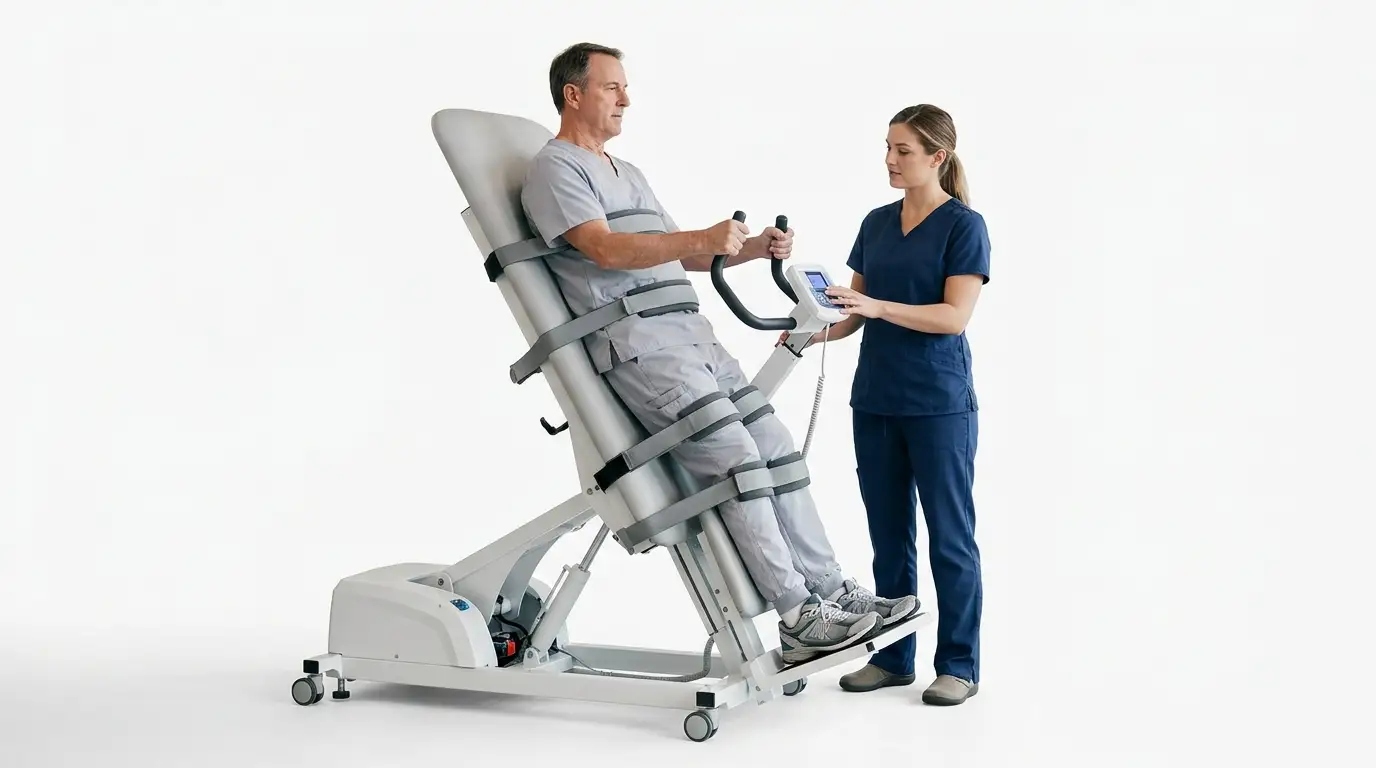
Motorized Tilt Table & Standing Frame Therapy is a modern rehabilitation approach that gradually moves patients from being in a horizontal position into a vertical one through the use of computerized tilt tables or standing frames. Through this therapy, patients who are unable to stand by themselves are able to initiate their rehabilitation through weight bearing while enjoying all the benefits that come along with it without experiencing adverse effects.
How It Works
The patient is securely positioned on the motorized tilt table or standing frame using safety straps and supports. The equipment gradually elevates the patient from horizontal to an upright position while therapists continuously monitor blood pressure, heart rate, posture, and tolerance. Controlled standing sessions stimulate muscles, joints, bones, circulation, and the nervous system while preparing patients for advanced mobility and gait rehabilitation.
Key System Engineering Elements
- Computer-Controlled Motorized Tilt Table
- Progressive Standing Rehabilitation
- Safe Weight-Bearing Training
- Adjustable Standing Angles
- Continuous Vital Monitoring
- Early Mobilization Protocols
- Pressure Relief Positioning
- Individualized Rehabilitation Programs
Expected Outcomes
Patients may experience improved standing tolerance, better circulation, increased muscle activation, improved bone and joint health, enhanced balance, greater independence, and smoother progression toward walking rehabilitation.
Methodology at Our Center
At Wellnest Physio & Rehabilitation Centre, Motorized Tilt Table & Standing Frame Therapy is integrated with robotic gait training, physiotherapy, functional strengthening, balance training, and neurological rehabilitation. Each treatment plan is carefully individualized to maximize recovery while ensuring patient safety and comfort throughout every stage of rehabilitation.
Frequently Asked Questions
Conditions Treated
- Stroke Rehabilitation
- Spinal Cord Injury
- Traumatic Brain Injury
- Paraplegia
- Quadriplegia
- Parkinson's Disease
- Multiple Sclerosis
- Guillain-Barré Syndrome
- Neuromuscular Disorders
- Prolonged Bed Rest
- Critical Illness Recovery
- Post Spine Surgery Rehabilitation
- Orthopedic Trauma Rehabilitation
- Lower Limb Weakness
- Deconditioning Syndrome
Who Should Have It?
Ideal for patients with severe weakness, paralysis, prolonged bed rest, stroke, spinal cord injury, traumatic brain injury, neurological disorders, orthopedic injuries, intensive care recovery, or anyone unable to stand independently.
When Should You Have It?
Recommended as soon as the patient is medically stable and cleared for early mobilization. Early standing rehabilitation is especially valuable after neurological injuries, spinal cord injuries, prolonged hospitalization, or major surgery.
Clinical Program Benefits
- Promotes early standing safely
- Improves blood circulation
- Prevents muscle wasting
- Maintains bone density
- Improves joint flexibility
- Reduces orthostatic hypotension
- Enhances cardiovascular conditioning
- Reduces pressure sore risk
⚠️ Compatibility Notice
May not be appropriate for patients with unstable fractures, uncontrolled blood pressure, severe cardiac instability, deep vein thrombosis, uncontrolled autonomic dysreflexia, or other medical conditions requiring physician clearance before standing therapy.