

Recovery after a brain or spine disorder is rarely a single event. For many patients, it is a gradual process of rebuilding movement, restoring confidence, improving independence, and adapting to physical and neurological changes that can affect everyday life.
Whether someone is recovering from a stroke, spinal cord injury, slipped disc, traumatic brain injury, Parkinsonian movement difficulties, or spine surgery, the early focus is often on diagnosis and immediate treatment. But long-term recovery usually depends on something equally important: rehabilitation.
At Brain & Spine Centre and WELLNEST Physio & Rehab in Kurnool, rehabilitation is viewed as an essential part of neurological and spine care not simply an optional step after treatment. Recovery is not only about reducing symptoms. It is also about helping patients regain mobility, balance, strength, posture, coordination, and confidence in daily life.
The importance of rehabilitation in neuro and spine recovery is strongly aligned with structured editorial, safety, evidence, and rehabilitation-focused healthcare frameworks.
Why Brain and Spine Disorders Often Affect More Than Pain
Many neurological and spinal conditions disrupt the body’s communication systems.
The brain controls movement, coordination, speech, balance, memory, and muscle activity. The spine protects the spinal cord and helps transmit signals between the brain and the rest of the body. When these systems are affected by injury, degeneration, compression, inflammation, or reduced blood flow, patients may experience much more than discomfort alone.
Some people develop:
- weakness in the arms or legs
- difficulty walking
- poor balance
- muscle stiffness
- numbness or tingling
- coordination problems
- reduced endurance
- posture instability
- difficulty performing routine activities
In some cases, even after surgery or medical treatment successfully addresses the underlying condition, the body still requires structured retraining to recover functional movement.
This is where rehabilitation becomes central to recovery.
Recovery Is Often a Process of Relearning Movement
After neurological injury or spinal dysfunction, muscles and nerves may not immediately return to normal function. The body often needs guided repetition, movement correction, strengthening, and coordination training.
Rehabilitation works by helping the nervous system adapt and recover as much function as possible over time.
For example:
- A stroke survivor may need gait and balance training to walk safely again.
- A patient recovering from cervical spine surgery may require posture correction and neck strengthening.
- Someone with chronic nerve compression may need mobility-focused physiotherapy to reduce stiffness and restore movement confidence.
- Patients with spinal cord injuries may benefit from long-term neuro rehabilitation aimed at maximizing independence.
Recovery timelines can vary widely. Some patients improve steadily over weeks, while others may require months of rehabilitation support depending on the severity of the condition, age, overall health, and timing of treatment.
Why Early Rehabilitation Can Make a Difference
One of the most important concepts in neuro and spine recovery is timing.
In many conditions, prolonged immobility can lead to:
- muscle wasting
- joint stiffness
- reduced balance
- poor circulation
- increased fall risk
- worsening mobility limitations
Early rehabilitation when medically appropriate may help patients maintain strength, improve confidence, and prevent secondary complications.
This does not mean aggressive exercise immediately after injury or surgery. Rehabilitation programs are typically individualized and adjusted according to the patient’s medical condition, pain levels, neurological status, and recovery goals.
A carefully supervised rehabilitation pathway may include gradual mobility progression, balance work, strengthening, posture correction, and functional retraining.
Rehabilitation Is Not Just Exercise
Many people assume rehabilitation simply means physiotherapy exercises. In reality, modern neuro-spine rehabilitation is often far more comprehensive.
Depending on the condition, rehabilitation may involve:
- neuro physiotherapy
- gait training
- posture correction
- balance rehabilitation
- mobility retraining
- muscle strengthening
- pain management strategies
- coordination training
- functional independence training
- ergonomic guidance
- spine stabilization exercises
Some patients recovering from neurological disorders may also require speech therapy, occupational therapy, or cognitive rehabilitation support.
The overall goal is to improve real-world function not merely reduce pain scores.
That distinction matters.
A patient may report less discomfort but still struggle to walk comfortably, climb stairs, maintain balance, or return to work. Effective rehabilitation focuses on restoring practical movement and improving quality of life wherever possible.
When Spine Recovery Requires More Than Surgery or Medication
Spine conditions are often closely linked to movement mechanics.
Even after treatment for slipped discs, sciatica, spinal stenosis, or degenerative spine disorders, patients may continue to experience:
- muscle weakness
- altered posture
- fear of movement
- reduced flexibility
- walking limitations
- core instability
Without rehabilitation, these movement patterns can persist and sometimes contribute to recurrent strain or delayed recovery.
Structured spine rehabilitation may help patients gradually rebuild:
- spinal stability
- flexibility
- walking endurance
- muscular support
- movement confidence
At WELLNEST Physio & Rehab, rehabilitation philosophy centers not only on symptom management, but also on long-term functional recovery and movement restoration.
Neuro Rehabilitation Often Extends Beyond the Hospital Phase
Neurological recovery frequently continues long after discharge from acute medical care.
Conditions such as:
- stroke
- traumatic brain injury
- Parkinsonian disorders
- spinal cord injury
- post-surgical neurological weakness
may require ongoing rehabilitation support even after immediate stabilization.
Families are often surprised to learn that improvements in walking, coordination, hand function, and balance can continue gradually with structured therapy and consistent training.
Progress may not always be linear. Some patients experience periods of rapid improvement, while others recover more slowly. Realistic expectations, continuity of care, and sustained rehabilitation support are important parts of long-term recovery.
Emotional Recovery Matters Too
Brain and spine disorders do not affect only the body.
They can also affect:
- confidence
- independence
- emotional well-being
- social participation
- daily routines
- family dynamics
Patients who suddenly struggle with walking, balance, pain, or weakness often experience frustration and anxiety during recovery.
A rehabilitation-focused environment can help patients regain confidence through gradual progress, education, movement retraining, and realistic recovery planning.
This emotional aspect of recovery is sometimes overlooked, but it plays a major role in helping patients remain engaged and motivated throughout rehabilitation.
Technology and Modern Rehabilitation Approaches
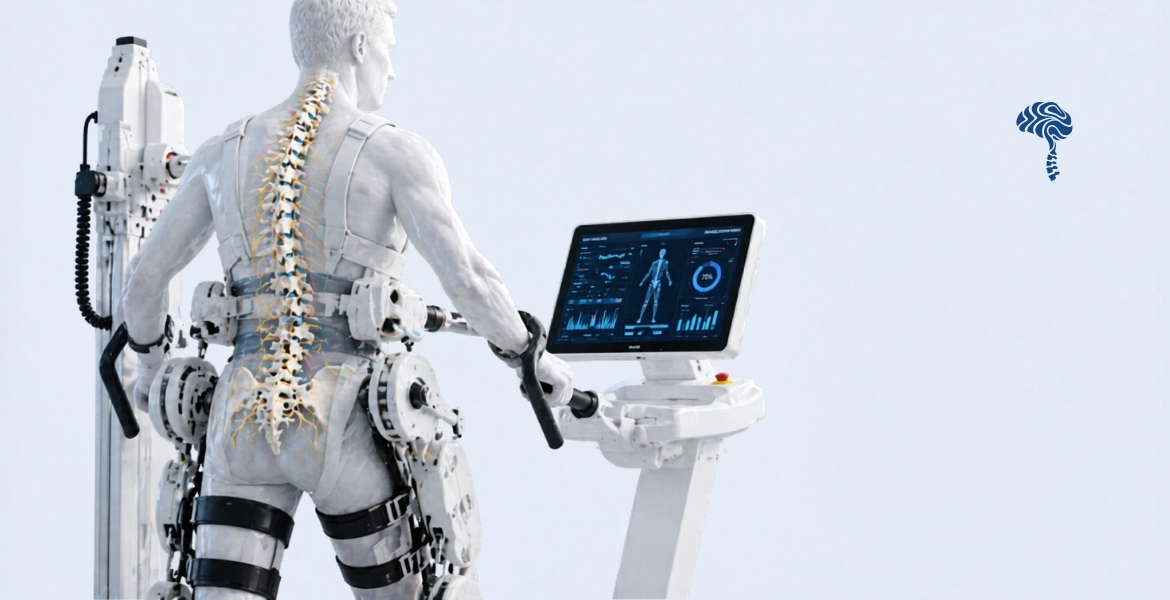
Modern rehabilitation increasingly combines clinical expertise with technology-supported recovery systems.
Depending on patient needs, advanced rehabilitation environments may include:
- gait training systems
- balance rehabilitation tools
- mobility analysis
- neuro rehabilitation equipment
- posture assessment technologies
- robotic-assisted rehabilitation support
These approaches are designed to support safer, more structured movement retraining while helping clinicians monitor progress more effectively.
Technology alone, however, is not the treatment. The quality of rehabilitation planning, patient engagement, individualized therapy progression, and multidisciplinary coordination remain equally important.
Recovery Is About Function, Independence, and Quality of Life
For many patients, successful recovery is not defined only by imaging scans or symptom reduction.
It is often measured by meaningful milestones such as:
- walking independently
- returning to work
- climbing stairs comfortably
- improving balance
- reducing fear of movement
- regaining hand coordination
- participating in family life again
This is why rehabilitation plays such a critical role in brain and spine care.
The goal is not simply survival or symptom control. The goal is helping patients recover movement, restore function, and improve long-term quality of life as much as possible.
At Brain & Spine Centre and WELLNEST Physio & Rehab, the recovery process is approached with a rehabilitation-first mindset that integrates neurological expertise, spine care, movement restoration, and structured recovery support close to home for patients across Rayalaseema.