Understanding Spinal Cord Injury
A spinal cord injury (SCI) disrupts the pathways that carry motor and sensory signals between the brain and the body below the level of injury. Injuries are classified as complete (no motor or sensory function below the level) or incomplete (some function preserved). The American Spinal Injury Association (ASIA) Impairment Scale grades severity from A to E.
The Acute Phase: First 72 Hours
Early management focuses on spinal stabilisation and preventing secondary injury. High-dose methylprednisolone, once standard, is now used selectively. Surgical decompression and fixation within 24 hours (early surgery) is associated with better neurological outcomes in several studies.
Goals of Rehabilitation
Rehabilitation begins in the ICU and continues for months to years. The multidisciplinary team includes physiatrists, physiotherapists, occupational therapists, speech therapists, psychologists, and rehabilitation nurses. Core goals include:
- Maximising residual motor and sensory function
- Preventing secondary complications (pressure sores, DVT, autonomic dysreflexia, contractures)
- Achieving functional independence in activities of daily living
- Community reintegration and vocational rehabilitation
Key Rehabilitation Modalities
Physiotherapy
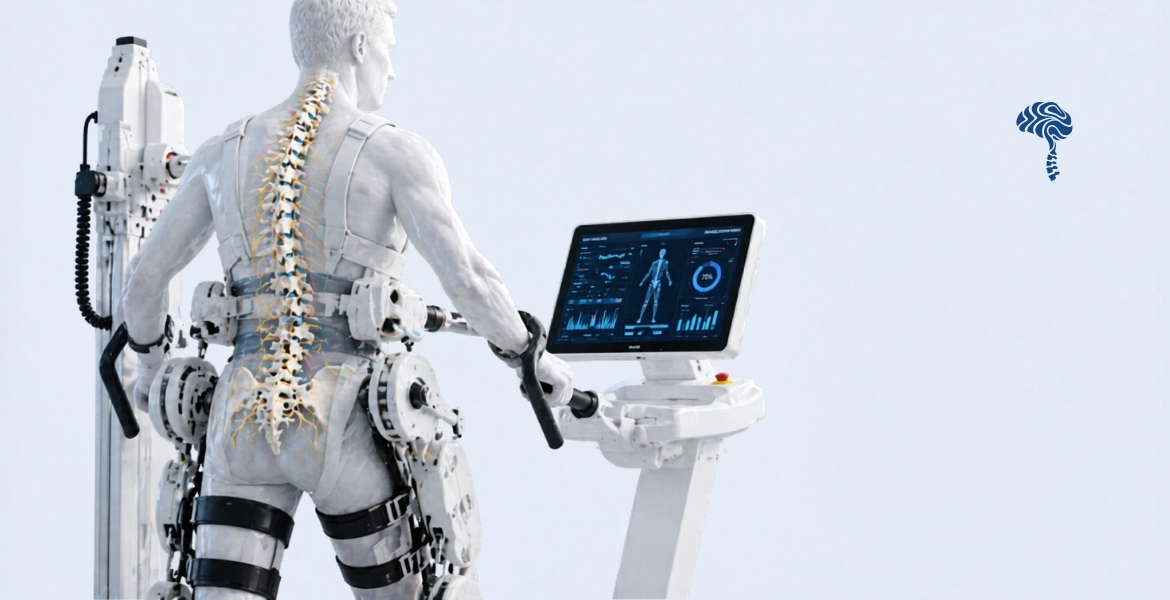
Body-weight supported treadmill training, robotic exoskeletons (Lokomat), and functional electrical stimulation (FES) are used to retrain walking in incomplete injuries. Strength training for preserved muscles is equally vital.
Occupational Therapy
Adapting the home environment, retraining upper-limb function, and prescribing appropriate assistive devices — manual or power wheelchairs, adapted utensils.
Neuroplasticity-Based Approaches
Activity-based therapy harnesses the spinal cord’s intrinsic neuroplasticity. Epidural spinal cord stimulation has enabled voluntary movement in some previously complete injuries — a landmark development reshaping our understanding of recovery potential.
“The spinal cord is not a static structure after injury. Consistent, intensive activity-based rehabilitation drives meaningful reorganisation.” — Rehabilitation Medicine Consensus Statement
Psychological Support
Depression affects up to 30% of SCI survivors. Peer mentorship programmes, cognitive behavioural therapy, and early psychiatric involvement are integral — not optional — components of comprehensive SCI care.