
What Is Hydrocephalus?
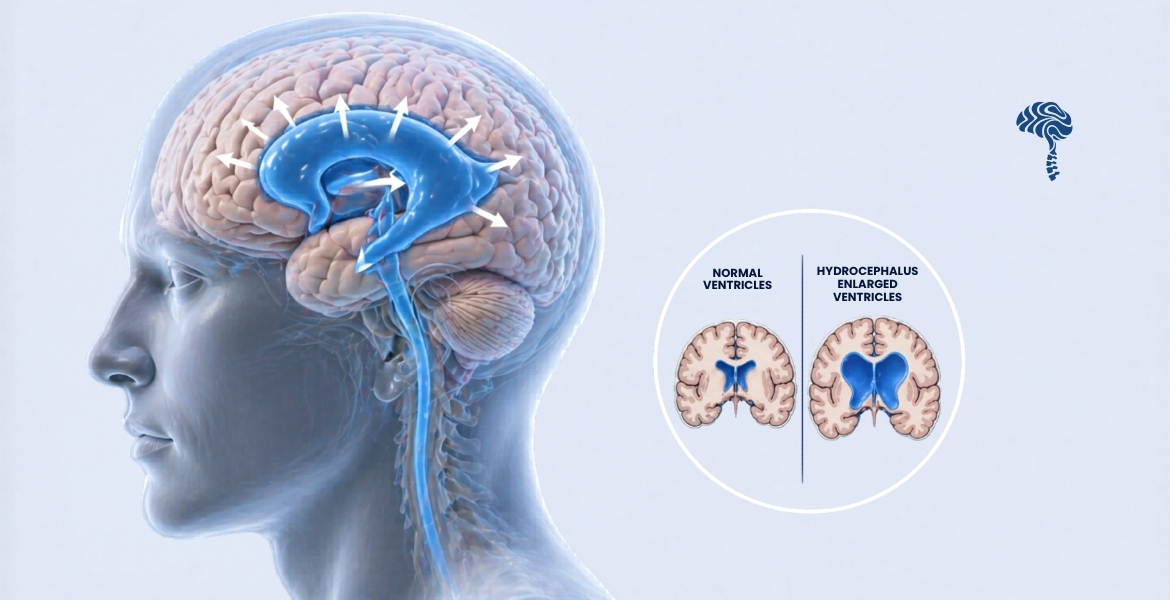
Hydrocephalus is an abnormal accumulation of cerebrospinal fluid (CSF) within the ventricular system of the brain. This causes ventricular enlargement and, in most cases, raised intracranial pressure. The term derives from the Greek: hydro (water) + kephalos (head).
In adults, hydrocephalus is most often secondary to another condition rather than congenital.
Causes in Adults
- Subarachnoid haemorrhage — blood breakdown products obstruct CSF reabsorption
- Meningitis — inflammatory adhesions at the arachnoid granulations
- Intraventricular or posterior fossa tumours — obstruction of CSF pathways
- Normal pressure hydrocephalus (NPH) — a distinct syndrome of unknown aetiology (see below)
- Aqueductal stenosis — congenital narrowing presenting in adulthood
Normal Pressure Hydrocephalus (NPH)
NPH deserves special attention as it is a reversible cause of dementia — often overlooked. The classic triad:
- Gait disturbance — magnetic gait, small shuffling steps, “feet glued to floor”
- Urinary incontinence
- Cognitive impairment — frontal-type, with slowed thinking and executive dysfunction
MRI shows ventriculomegaly disproportionate to sulcal atrophy. High-volume lumbar puncture tap test (removal of 30–50 mL CSF) with gait improvement is strongly predictive of shunt response.
Symptoms of Raised ICP Hydrocephalus
- Headache — worse in the morning, with Valsalva
- Nausea and projectile vomiting
- Papilloedema on fundoscopy
- Upward gaze palsy (“sunsetting sign” in severe cases)
- Reduced consciousness — a late and ominous sign
Treatment
Ventriculoperitoneal (VP) Shunt
The most common surgical treatment. A programmable valve diverts CSF from the lateral ventricle to the peritoneal cavity where it is reabsorbed. Modern programmable valves allow non-invasive adjustment of drainage resistance with a magnet.
Endoscopic Third Ventriculostomy (ETV)
An endoscope creates a communication between the third ventricle and the basal cisterns — bypassing an obstruction. It avoids a shunt entirely and is preferred for obstructive hydrocephalus, particularly aqueductal stenosis. Success rates in adults are 70–80%.