
Defining Epilepsy
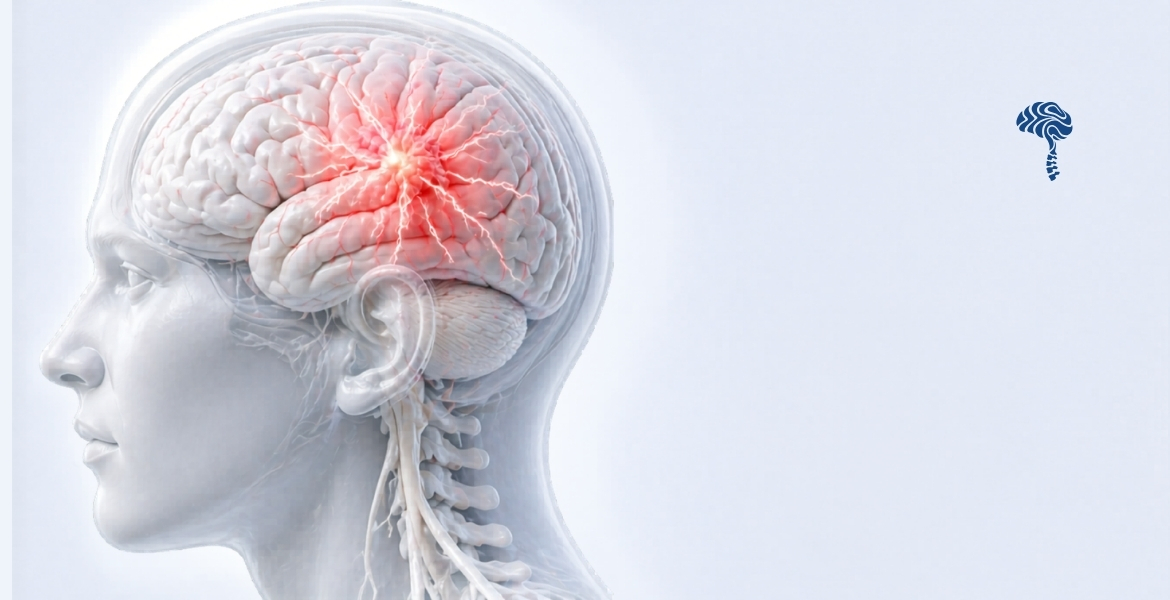
Epilepsy is a chronic neurological disorder characterised by recurrent, unprovoked seizures — transient episodes of abnormal, excessive, or synchronous neuronal activity in the brain. A diagnosis requires either two unprovoked seizures more than 24 hours apart, or one unprovoked seizure with a high risk of recurrence.
Globally, epilepsy affects approximately 50 million people, making it one of the most prevalent neurological conditions.
Types of Seizures
Focal Seizures
Originating in one hemisphere. May remain localised (focal aware) or spread and impair consciousness (focal impaired awareness). Secondary generalisation can occur.
Generalised Seizures
- Tonic-clonic (grand mal) — loss of consciousness, stiffening, then rhythmic jerking
- Absence — brief staring spells, common in children
- Myoclonic — sudden brief muscle jerks, typically in the morning
- Atonic — sudden loss of muscle tone (“drop attacks”)
First Aid During a Seizure
- Protect the person from injury — clear the immediate area
- Cushion the head; turn gently onto their side to maintain airway
- Do NOT put anything in their mouth
- Do NOT restrain them
- Time the seizure — call emergency services if it lasts more than 5 minutes
Most seizures end on their own within 1–3 minutes. Stay calm, stay with the person, and time it.
Diagnosis
EEG (electroencephalogram) records electrical brain activity and can identify seizure patterns. MRI rules out structural causes. Blood tests screen for metabolic triggers (electrolyte disturbances, glucose, thyroid).
Treatment
Anti-seizure medications (ASMs) are the mainstay — levetiracetam, valproate, lamotrigine, and carbamazepine among the most prescribed. Around 70% of people achieve seizure freedom with the first or second ASM.
For drug-resistant epilepsy (failure of ≥2 appropriate ASMs), surgical evaluation, vagus nerve stimulation (VNS), or the ketogenic diet may be considered.
Living with Epilepsy
With proper management, most people with epilepsy lead full, active lives. Key lifestyle measures include consistent sleep, alcohol moderation, and medication adherence. Driving restrictions vary by country and seizure-free interval — always consult your neurologist.