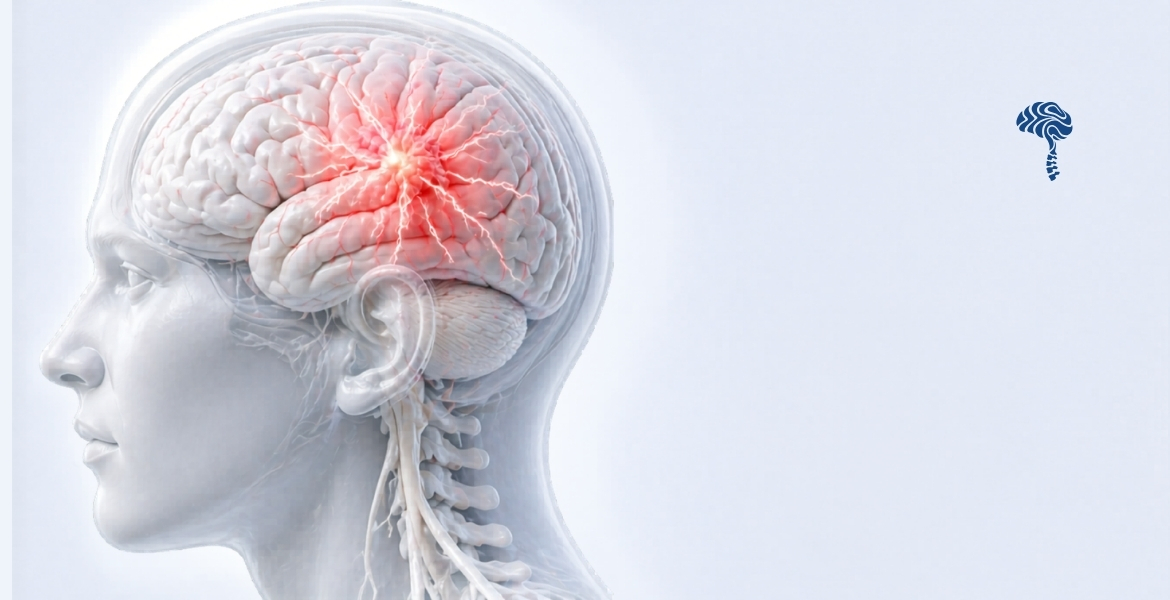

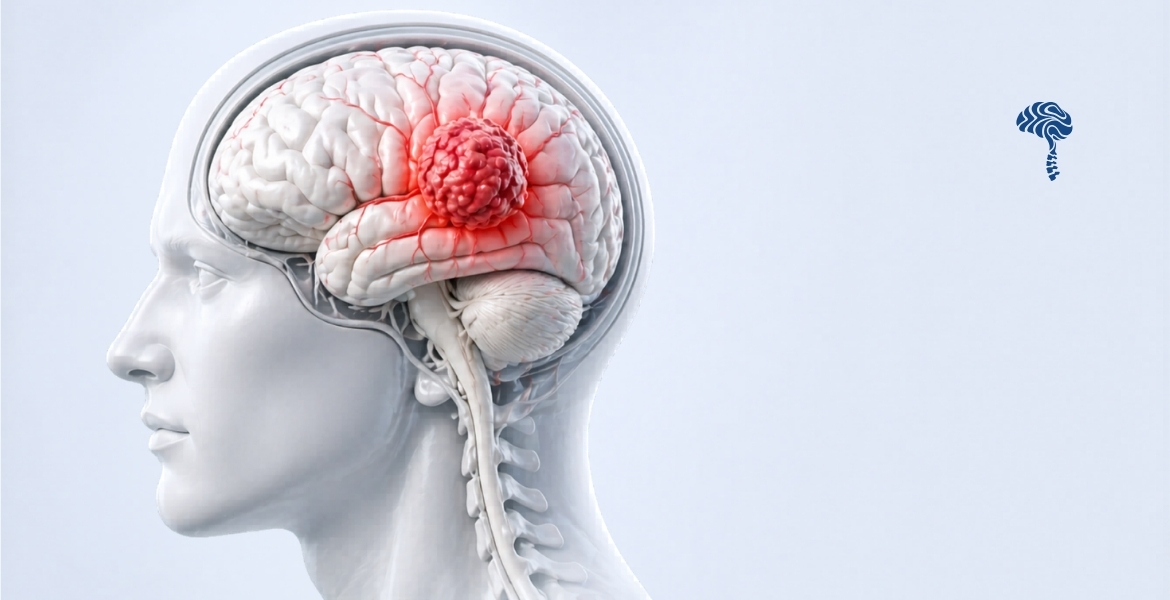
What Is a Brain Tumour?
A brain tumour is an abnormal mass of cells within the brain or the central spinal canal. Tumours can be primary (originating in brain tissue) or secondary/metastatic (spread from cancer elsewhere in the body). Not all brain tumours are malignant — meningiomas and acoustic neuromas, for example, are frequently benign.
Classification
The WHO grades brain tumours from Grade I (slow-growing, favourable prognosis) to Grade IV (aggressive, such as glioblastoma multiforme). Understanding grade and cell type guides treatment decisions profoundly.
Warning Signs You Should Not Ignore
- New-onset or progressively worsening headaches — especially those that wake you from sleep or are worst in the morning
- Unexplained nausea and vomiting without GI cause
- Vision changes: blurring, double vision, or peripheral field loss
- Seizures with no prior history of epilepsy
- Cognitive changes — memory lapses, personality shifts, difficulty with language
- Unexplained weakness or numbness on one side of the body
A single new seizure in an adult with no prior history warrants urgent neuroimaging. Do not wait and watch.
Diagnosis
Contrast-enhanced MRI is the investigation of choice. Functional MRI (fMRI) and diffusion tensor imaging (DTI) help map eloquent cortex before surgery. Tissue diagnosis via biopsy or resection specimen confirms tumour type and grade.
Treatment Approaches
Surgery
Maximum safe resection is the cornerstone of management for most primary tumours. Awake craniotomy is employed when the tumour involves speech or motor areas, allowing real-time neurological monitoring during resection.
Radiation Therapy
Stereotactic radiosurgery (Gamma Knife, CyberKnife) delivers precise high-dose radiation to small, well-defined tumours. Fractionated radiotherapy is used for larger lesions or post-operative adjuvant treatment.
Chemotherapy
Temozolomide is the standard agent for high-grade gliomas, often given concurrently with radiotherapy. Bevacizumab targets tumour vasculature in recurrent glioblastoma.
Prognosis
Outcomes vary enormously by tumour type, grade, and molecular markers (IDH mutation, MGMT methylation status). Grade I meningiomas carry excellent long-term prognosis post-resection; glioblastoma remains a formidable challenge with median survival of 14–16 months despite optimal treatment.